Beautiful flowers gardenia Plants For Your homes
 Skip to content
Beautiful flowers gardenia Plants For Your homes

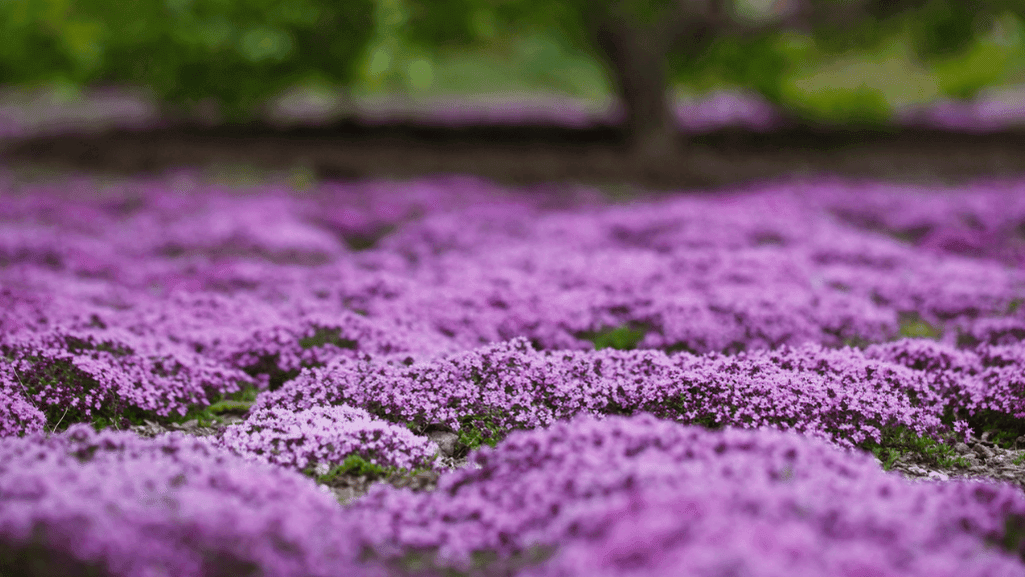
Creeping thyme is a low-growing, aromatic perennial in the mint family. It has captured the hearts of many gardeners and landscapers. Its ability to form dense, fragrant mats of foliage and delicate flowers makes it a popular choice for groundcover, rock gardens, and pathways. But where does this charming plant originate from? Let’s explore the native range of creeping thyme and discover its geographical distribution and habitat preferences.
Creeping thyme, scientifically known as Thymus praecox, is native to Greenland, Europe, and Turkey. It has adapted to various climates and environments. It thrives in well-drained soils and full sun exposure. The species name “praecox” is derived from Latin, meaning “very early,” which likely refers to its early flowering habit.
With over 350 species within the Thymus genus, creeping thyme is part of a diverse group of plants. They have their origins in the Mediterranean region of Southern Europe, Central Asia, and Northern Africa. Thymes have a rich history of cultivation. Ancient civilizations like the Greeks, Romans, and Egyptians used them for cooking, embalming, incense burning, purification, and medicinal properties.
Creeping thyme is a low-growing, evergreen groundcover loved by gardeners. It’s known for its attractive leaves, delicate flowers, and ability to grow well in many places. With over 150 varieties, it’s perfect for adding beauty and function to outdoor areas.
Creeping thyme includes many species, mainly from the Thymus serpyllum and Thymus praecox groups. These plants come from Europe, North Africa, and Asia. They grow well in different climates and soils. Some common types are:
Even though it’s in the mint family, creeping thyme is not often used in cooking. It’s mainly used for decoration, as a groundcover or filler in gardens.
Creeping thyme grows low and spreads out, reaching 2 to 3 inches tall. It forms a dense, evergreen carpet. Its leaves are small, oval, and aromatic, with colors from green to blue-green. Some varieties, like Thymus serpyllum ‘Aureus’, have golden or variegated leaves.
Creeping thyme cultivars are separated into two groups: prostrate, which grow less than 3 inches high, and mounding, which form more than 3 inches high undulating, green or silver carpets.
In late spring to mid-summer, it blooms with small, tubular flowers in pink, purple, or white. These flowers attract bees and butterflies, making it great for eco-friendly gardens. Once it’s established, it’s drought-tolerant and easy to care for, needing well-drained soil and sun to partial shade.
Creeping thyme is a favorite for its hardiness, beauty, and ability to handle foot traffic. It’s perfect as a lawn substitute, between stepping stones, or cascading over rock walls. Knowing how it grows helps gardeners use it to create beautiful, easy-to-care-for outdoor spaces.

Creeping thyme is a low-growing perennial herb found in many parts of the world. It grows in Europe, the Mediterranean, Turkey, and even Greenland. This plant is great for landscaping and groundcover because it adapts well to different climates and habitats.
Creeping thyme is mostly found in Europe. It grows in the Mediterranean and Turkey, and even in Greenland. This shows how well it can adapt to different environments.
Some types of creeping thyme are also found in Eastern and Northwestern North America. This shows the plant’s ability to spread and thrive in new places.
Creeping thyme likes full sun and well-drained soils. It does well in sandy or rocky areas. It’s also good for xeriscaping and low-maintenance gardens because it can handle drought and poor soil.
In its natural habitats, creeping thyme enjoys mild winters and can stay green in moderate temperatures. But, it doesn’t like wet or poorly drained soils, as it can cause root rot.
In places like Greenland, creeping thyme is very hardy and can handle cold. In these areas, it goes dormant in winter but comes back strong in spring.

Creeping thyme is a favorite for gardens, coming from the Thymus genus with over 200 species. It’s a low-growing, Mediterranean native now found in Europe. It’s both beautiful and practical for gardens.
Thymus praecox, or mother of thyme, is a key creeping thyme type. It’s a ground cover thyme native that grows up to 10cm tall. It has red to pink flowers that attract bees and other helpful insects.
It’s great for tough spots because it’s tough and grows well in poor soil.
‘Coccineus’ is a special version of Thymus praecox. It’s known for its deep pink flowers. This shows the variety in colors and growth styles within the species.
Thymus serpyllum, or Breckland thyme, is another important creeping thyme. It’s found in most of Europe, including the UK. It grows 5 to 10cm tall and is evergreen, making it good for paths and walkways.
It likes well-draining, gritty soil and low humidity. Once it’s settled, it can handle dry spots and grow in many places.
Thymus praecox and Thymus serpyllum are top picks for landscaping. They’re low-growing and keep their leaves year-round. They’re also good for saving water, making them perfect for xeriscaping.
With the need to save water growing, using creeping thyme like Thymus praecox and Thymus serpyllum is a smart choice. It’s a green alternative to regular lawns.

Creeping thyme is native to Europe, the Mediterranean, Turkey, and Greenland. It grows well in sunny spots with well-drained soil. The Missouri Botanical Garden says it thrives in USDA zones 2-9.
Its main origin is Europe, but some types are found in North America too. For example, Red Creeping Thyme grows up to 3 inches tall and 12 to 18 inches wide. It forms a fragrant carpet.
Other notable varieties include:
Creeping thyme has spread to many areas with similar climates. It’s a favorite for gardens and landscapes because of its adaptability and beauty.
Thymus serpyllum biogeography reveals a plant that has successfully spread across continents, thriving in diverse climates and soil types.
In milder climates, creeping thyme stays green year-round. In colder areas, it dies back but grows again in spring. This makes it a favorite among gardeners, as noted by Flowers Gardenia.
Creeping thyme grows in many places across Europe, Asia, and North America. It can thrive in USDA zones 4-9, fitting well in various gardens. It loves dry soil and doesn’t need much water, making it great for hot, dry areas.
In the UK, it’s known for growing in poor soil and attracting bees and butterflies. In North America, it’s found from the northeast to the Pacific Northwest. This shows it can adapt to many environments. Gardeners in these areas can use it to make their gardens look good and help the environment.
Knowing where creeping thyme grows helps gardeners choose the right plants. It’s perfect for gardens that need little care but still support local wildlife. As more people garden in eco-friendly ways, creeping thyme will likely stay a favorite in many gardens.




 Optimized by Seraphinite Accelerator