Beautiful flowers gardenia Plants For Your homes
Beautiful flowers gardenia Plants For Your homes


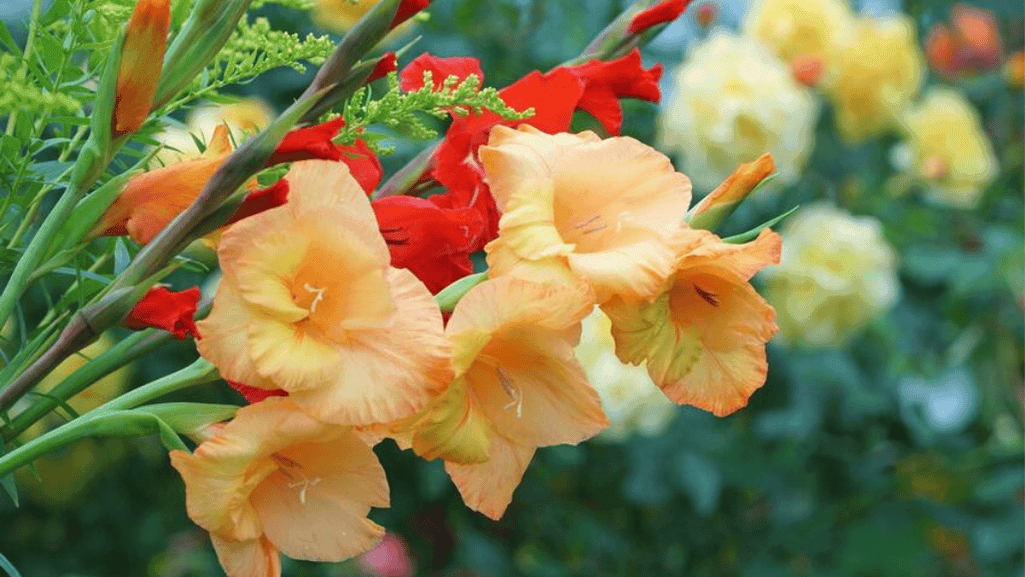
Make your garden stand out with the gladiolus flower. These flowers grow tall and have vibrant spikes. They have changed gardens in America for years. Baldwin County was a key place for growing gladiolus flowers, producing 20,000 dozen flowers a day. Foley sent out 1.25 million flowers in one day.
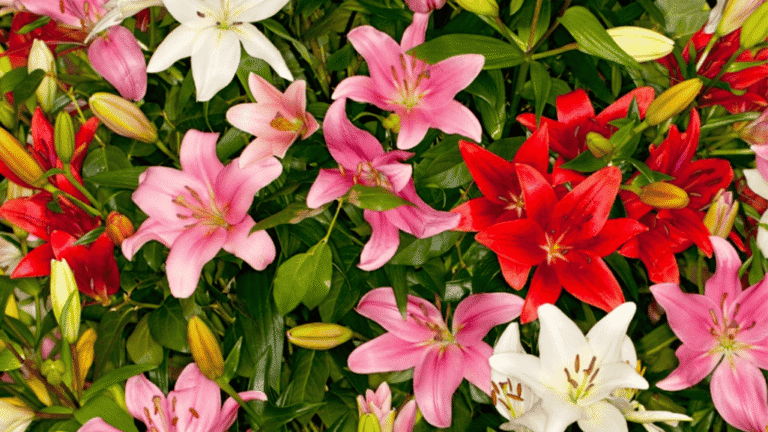
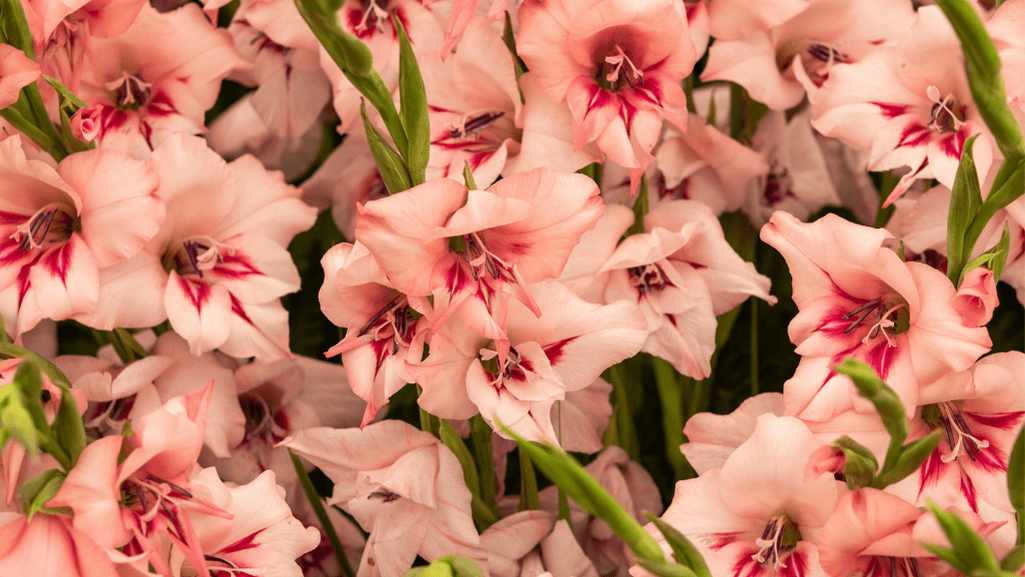
Gladiolus flowers come in many colors like pink, red, yellow, white, and bicolors. They are great for both new and experienced gardeners. These flowers are tough, growing well in Zones 8 and 9 without needing to be moved indoors for the winter. They add drama to gardens with their height of 2 to 6 feet.
In mid to late summer, gladiolus flowers bloom beautifully. In colder areas, they go dormant in winter but can be planted in spring for a summer bloom. These flowers are charming, lasting long in a vase and coming in many varieties like ‘Passos’ and ‘Green Star.’
The Gladiolus, also known as the gladiolus sword lily, brightens gardens with its beautiful spikes. It comes in many colors, from soft pastels to bright ones. This flower has deep meanings, tracing back to ancient times. It stands for remembrance and strength in many cultures.
There are many types of gladiolus, each with its own charm. You can find the ‘Green Star’ with its unique lime green color, or the ‘Rose Supreme’ with its warm, rosy-salmon look. Hybrids like the Gladiolus ‘Spic and Span’ from 1947 add to their variety.
With the right care, gladiolus plants can grow and produce many cormlets each year. This means one plant can spread out more in your garden over time.
The gladiolus sword lily has a long history, symbolizing strength and honor. In ancient Rome, gladiators wore these flowers as a sign of victory. Over time, they also became a symbol of remembrance.
These flowers have been in American gardens since the 19th century. The G. dalenii, for example, has been grown since 1843. They can be grown as perennials in warm areas and as annuals in cooler ones.
If you want to grow these beautiful flowers, check out this guide on gladiolus care. It has tips on planting and managing pests to help your gladiolus flourish.

Choosing the right gladiolus bulbs, also known as gladiolus corms, is key for a garden full of beautiful flowers. It’s important to know about gladiolus bulb size and health for great results. Here are tips to make sure your gladioli are vibrant and healthy.
First, pick gladiolus corms that are strong and without damage. Bad spots can cause disease and harm the plant. Checking the corms for health before planting helps avoid problems later.
Larger gladiolus bulb size usually means bigger and more impressive flowers. Aim for corms about 12/14 cm in size for the best blooms.
There are over 250 types of gladioli, offering many colors and sizes. Picking the right gladiolus corms can really make your garden stand out.
| Flower Size Class | Diameter |
|---|---|
| Giant | Over 5½ inches |
| Large | 4½–5½ inches |
| Medium | 3½–4½ inches |
| Small | 2½–3½ inches |
| Miniature | Under 2½ inches |
For more on planting and caring for gladiolus, check out this guide. It covers everything from selection to upkeep for stunning flowers.
Investing in top-quality gladiolus corms is about more than just looks. It’s about keeping the plants healthy and long-lasting. Choosing the right corms means a garden that looks great all season.
Welcome to the essential gladiolus planting guide. It’s all about getting vibrant blooms and a thriving garden. By following the right planting tips and knowing the growing season, you’ll set your garden up for success.
Timing is key for a beautiful gladiolus display. Plant in spring or early summer, about 12 weeks before the first frost. This lets the plants grow and bloom by summer. Since gladiolus loves warm climates, adjust planting based on your area’s weather.
Getting the soil ready is crucial for gladiolus. It should drain well but hold moisture. Add organic matter to boost fertility. Aim for a pH that’s slightly acidic to neutral. Testing your soil can help a lot here.
Here are key tips for planting gladiolus:
Follow these steps and care tips for a colorful summer garden. Remember, good care and watching out for pests like thrips can extend the gladiolus season. For more gardening tips, check out how peonies can enhance your garden.
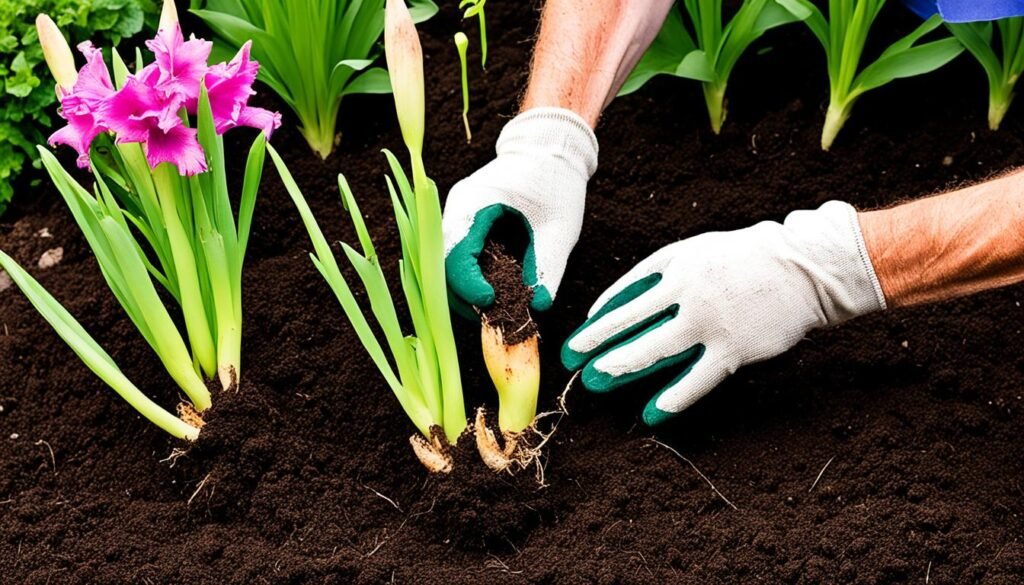
To make sure your gladiolus blooms beautifully, follow good gladiolus care. This includes the right watering and pest control. Each step helps keep these flowers healthy and bright.
For gladiolus plant care, keep the soil moist all season. Water your plants deeply once a week, or more in dry weather. Use high-phosphorus fertilizers to help them grow tall and bloom well. Make sure the soil’s pH is between 6.0 and 6.5 for best nutrient use.
Taller gladiolus plants can grow up to 5 feet tall. They need strong stakes to avoid bending or breaking. Put in stakes when you plant them for support as they grow. This keeps your garden looking great and protects your plants from wind.
Check your plants often for any problems. Thrips, mites, and fungi can harm them. Catching and treating these early can save your plants. Keep the area clean to prevent pests and diseases.
Follow these tips for a thriving gladiolus garden. Your garden will show off its bright colors from June until fall. Consistent gladiolus care leads to a great blooming season.
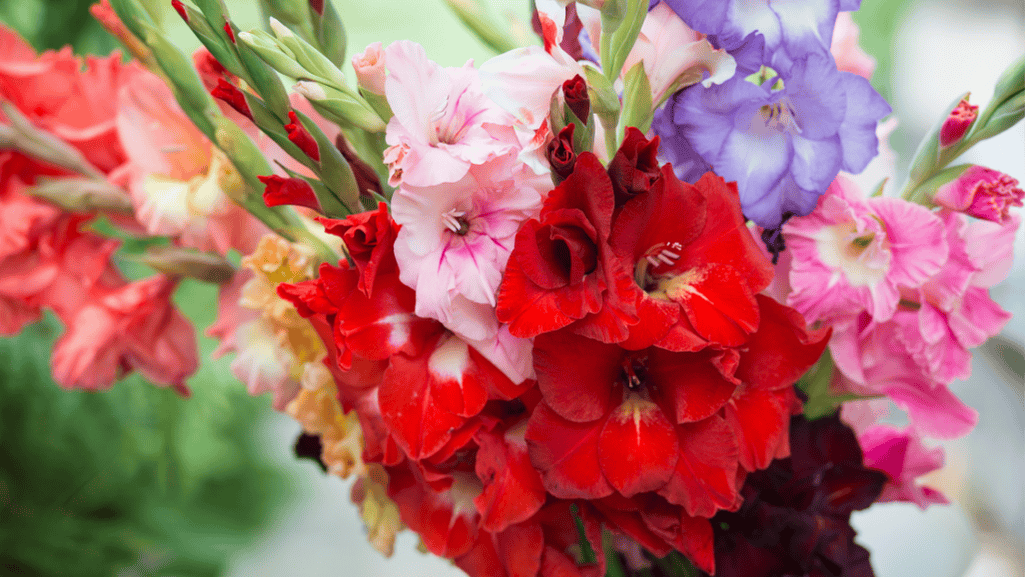
The world of gladioli is a treasure trove for garden lovers and floral designers. They come in a wide range of gladiolus colors and gladiolus varieties. These flowers are not just beautiful but also carry deep meanings. They symbolize strength, integrity, passion, and remembrance.
With over 250 species, gladioli offer a color palette for every taste. Each color has its own special meaning. Yellow gladioli stand for joy, red for love, pink for kindness, purple for charm, and white for purity.
| Gladiolus Variety | Height (cm) | Color Significance |
|---|---|---|
| Grandiflora | 100-150 | White – Purity & Innocence |
| Miniature | 50-70 | Yellow – Cheerfulness & Compassion |
| Purple Charm | 80-120 | Purple – Grace & Charm |
| Passion Red | 110-170 | Red – Love & Passion |
| Feminine Pink | 80-140 | Pink – Femininity & Compassion |
Gladioli are more than just pretty flowers. They have a rich history, coming from South Africa. Today, they’re often used for special events like anniversaries and birthdays. They’re also used to honor loved ones who have passed away, thanks to their deep meanings.
To keep gladioli looking their best, plant them in well-draining soil. Make sure they get full sun and add mulch to control moisture and temperature. Taking good care of them ensures they bloom beautifully all season.
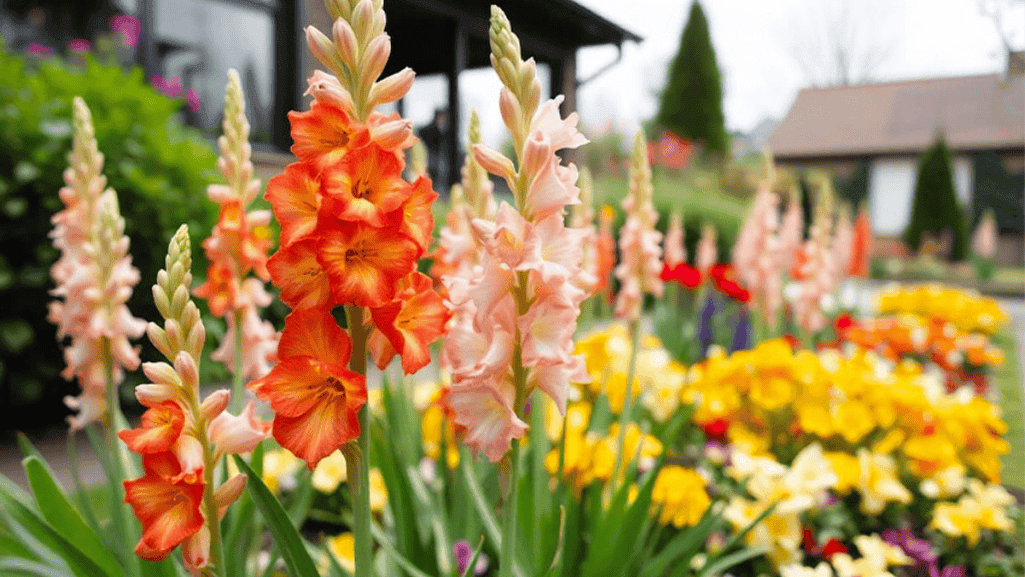 Gladioli are not just colorful flowers; they’re also versatile in decor and embellishment. They can be used to create stunning bouquets or enhance your garden. The possibilities are endless.
Gladiolus flowers are perfect for making eye-catching bouquets because of their tall stems. A bouquet usually has 10-15 stems, letting each flower stand out. White gladiolus are a top choice for weddings and formal events, adding elegance.
To keep your bouquet fresh, always use sharp tools to cut the stems. Also, change the water every day.
Adding gladioli to your garden can make it a colorful and interesting place. Mix them with other plants to add texture and depth. Use different types of gladiolus to create layers, making your garden more engaging.
Gladiolus are great for garden design because they can be the main attraction or a beautiful backdrop. They keep their color even when they dry, adding beauty to your garden for a long time.
Here’s a guide to help you create stunning gladiolus arrangements:
| Arrangement Type | Stem Height | Stem Count | Special Considerations |
|---|---|---|---|
| Bridal Bouquets | 24-36 inches | 10-15 stems | Use floral preservatives to extend freshness. |
| Table Centerpieces | 18-24 inches | 5-7 stems | Change water daily; use a sharp knife for trimming. |
| Garden Landscape | Varies | As desired | Integrate with other perennials for depth and contrast. |
Whether you’re making a bouquet for a special event or designing a garden, gladiolus arrangements add beauty and vibrancy. Follow these tips to highlight the elegance and beauty of these flowers in your arrangements.
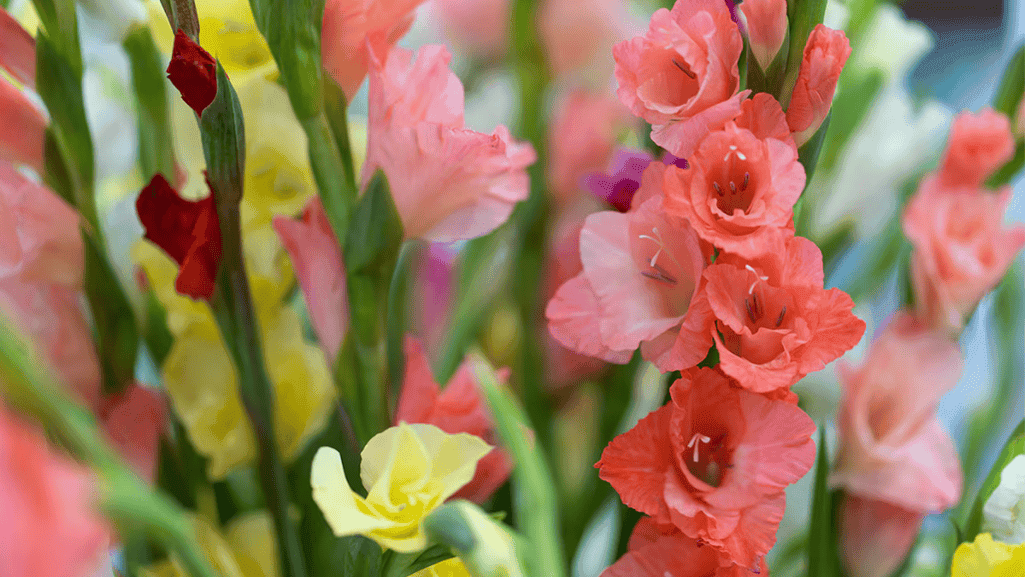 To make your garden bright with gladiolus, use gladiolus growing tips and gladiolus cultivation methods. This will make your flowers look great from start to finish. Planning and caring for your gladiolus can make them more colorful and lively.
Plant gladiolus corms every week from spring to early summer for more flowers. This way, you get flowers all season long. Adding different types like peacock orchids makes your garden more colorful and extends the time flowers bloom.
Feed your plants with a 10-10-10 fertilizer every 4 to 6 weeks. This keeps them healthy. For tips on growing gardenias, check out care techniques for gardenias.
Keeping the soil moist and giving plants enough space are key. This helps roots grow strong and flowers bloom well. Mulching around the plants keeps moisture in and stops weeds from growing.
Use stakes or bamboo canes to support gladiolus when they’re about a foot tall. This stops the stems from breaking in the wind. Cutting off dead flower spikes makes the plant focus on new blooms instead of seeds.
Before winter, dig up gladiolus corms when the leaves turn yellow. Store them in a cool, dark place for next year. Watch for signs of rot, thrips, or mites and treat them quickly to keep your gladiolus healthy.
| Gladiolus Care Aspect | Importance | Recommended Practice |
|---|---|---|
| Staggered Planting | Extends bloom period | Plant corms weekly from spring to early summer |
| Soil Moisture | Encourages root and bloom health | Keep soil consistently moist, water deeply once a week, more in hot, dry conditions |
| Spacing and Staking | Prevents disease and physical damage | Ensure adequate spacing for air circulation, stake plants at 1 foot tall |
 To keep gladiolus flowers beautiful over many seasons, focus on storing gladiolus corms and gladiolus propagation. We’ll show you how to harvest, preserve, and multiply these lovely blooms.
Start harvesting gladiolus when the plants have bloomed and the leaves have died back. This step is key for the corms’ energy for next year. When the leaves turn yellow and wilt, it’s time to dig them up. Use a garden fork to lift them carefully.
After digging, cure the gladiolus corms. Lay them out in a dry, airy spot, away from the sun, for a few weeks. Then, clean off any soil and remove old corms and roots. Check the corms for disease or damage and throw away any bad ones.
Store the corms in a cool, dark place between 35°F and 50°F. Make sure the storage area is well-ventilated to avoid moisture, which can cause rot. This keeps the corms dormant and safe until it’s time to replant them.
You can grow new gladiolus plants from cormlets or by dividing mature corms. The small cormlets grow around the mother corm and can be separated and planted. But, they might take a couple of years to bloom.
Plant the cormlets or divided corms in well-drained soil in the spring, after the last frost. Put them 4-6 inches deep and 6-10 inches apart for enough room to grow. Take good care of them with water, mulch, and fertilizer for healthy blooms and growth.
For ongoing blooms, plant every two weeks. This way, you’ll have gladiolus flowers all season long.
| Variety | Height | USDA Hardiness Zone | Flowering Days Post Planting |
|---|---|---|---|
| Glamini Glads | 2-3 feet | 5-10 | 70-100 |
| Hardy Glads | 3-4 feet | 5-10 | 70-90 |
| Tall Gladiolus | 4 feet | 7-10 | 70-100 |
By following these steps for harvesting gladiolus and gladiolus propagation, gardeners can enjoy these beautiful flowers every year. Seeing gladiolus grow and bloom season after season is a joy for any flower lover.
As we end our journey into the world of gladiolus flower gardens, we see how much these flowers mean to us. In August, gladiolus flowers grow tall and bloom in many colors. They add beauty to our gardens and play a big part in our traditions and celebrations.
Gladiolus flowers lift our spirits and make us feel better emotionally. They turn any garden into a place of beauty and peace. Even though animals like to eat them, gladiolus plants are important for our ecosystem.
These flowers have been important for thousands of years, symbolizing strength and love. They remind us of the beauty and emotions they bring to our lives. Gladiolus flowers show us the power of nature and the stories it tells.
Gladiolus flowers have a deep history and are loved by many. They teach us that every garden has a story. Let’s cherish these flowers and the love they bring to us.